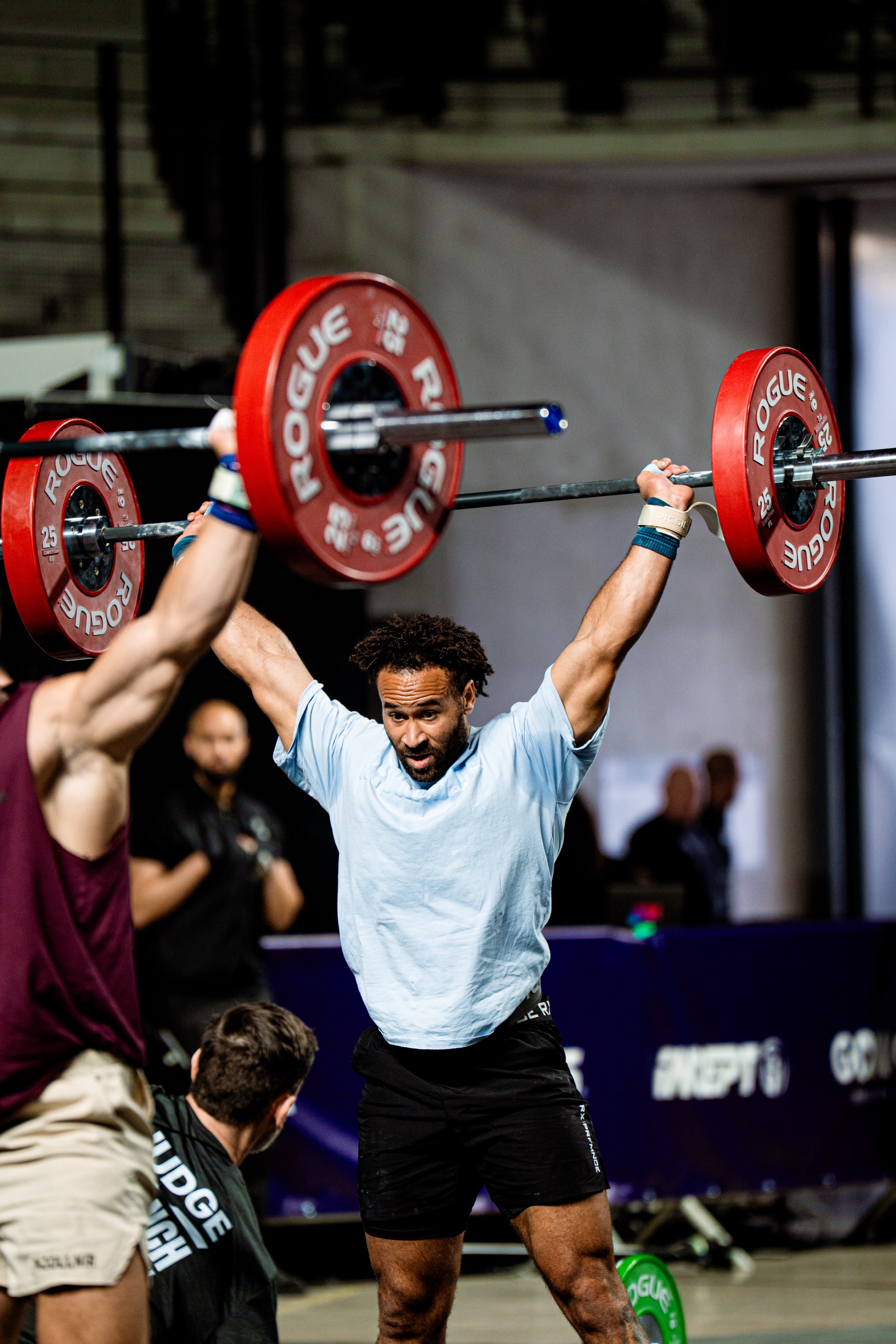
Block 2: May 18 – June 28
Test Week: June 29 – July 5
We are now moving into our CF Specific Block. The focus for us now is to get better at combining the things that we have worked on more separately in the Building Block. In the Building Block we raised the ceiling on individual capacities: strength, endurance, and skills. Now we need to learn how to use all of that at the same time. This is after all how we compete.
The reason for this shift is something we have learned over the years: being good at all capacities separately is not the same as being good at CrossFit. In order to get good at CrossFit we need to do a lot of CrossFit. This means more metcons, more varied movement combinations, and more practice at the things that separate the best athletes from the rest: efficiency, strategy, and transitions.
We are also now preparing for our Test Week (Week 27, June 29 – July 4). This means that the strength progressions we still keep are the ones that we are going to test during the Test Week. These movements and tests will now be more specific and you will see more max strength work where we typically build up to today's heavy 6, 5, 4, etc.
The CF Specific Block is also where we often find more specific limiters that are holding us back. You might discover that your grip endurance holds you back in Thruster and Chest-to-Bar Pull Up combos, or that your transition speed between the barbell and the rig costs you more time than you thought. This block helps you target and improve those limiters. Send us a message if you have a specific limiter that you want us to help create a plan for.
Note that even in the CF Specific Block we still do work on individual capacities, just less of it. And in the Building Block we still did CrossFit workouts, just less of them. The emphasis shifts, and that shift is what creates both the progress and the variety that keeps motivation high.
In the CF Specific Block we focus on four key areas that all contribute to making you better at CrossFit workouts. These are the things that separate good athletes from great athletes, and where the biggest improvements often come from.
Weeks 1–3: Build. We introduce the CF Specific training style with more metcons and more variation. We still keep good quality on the strength work and the intensity in the metcons is moderate. This is where you learn the new structure and find your rhythm.
Weeks 4–5: Push. Intensity and specificity go up. The metcons get harder and more competition-style. The strength work stays focused on the test movements. This is where you push yourself closer to what it feels like to compete.
Week 6: Deload. We pull back the volume and intensity to make sure you go into the Test Week fresh, recovered, and ready to perform at your best.
Below you can see an example of how the training weeks will look. Note that the CF Specific Block has more variation between weeks than the Building Block. The metcons change every day and the strength variations rotate. What stays consistent is the structure: which days target which capacities and which sessions build toward the tests.
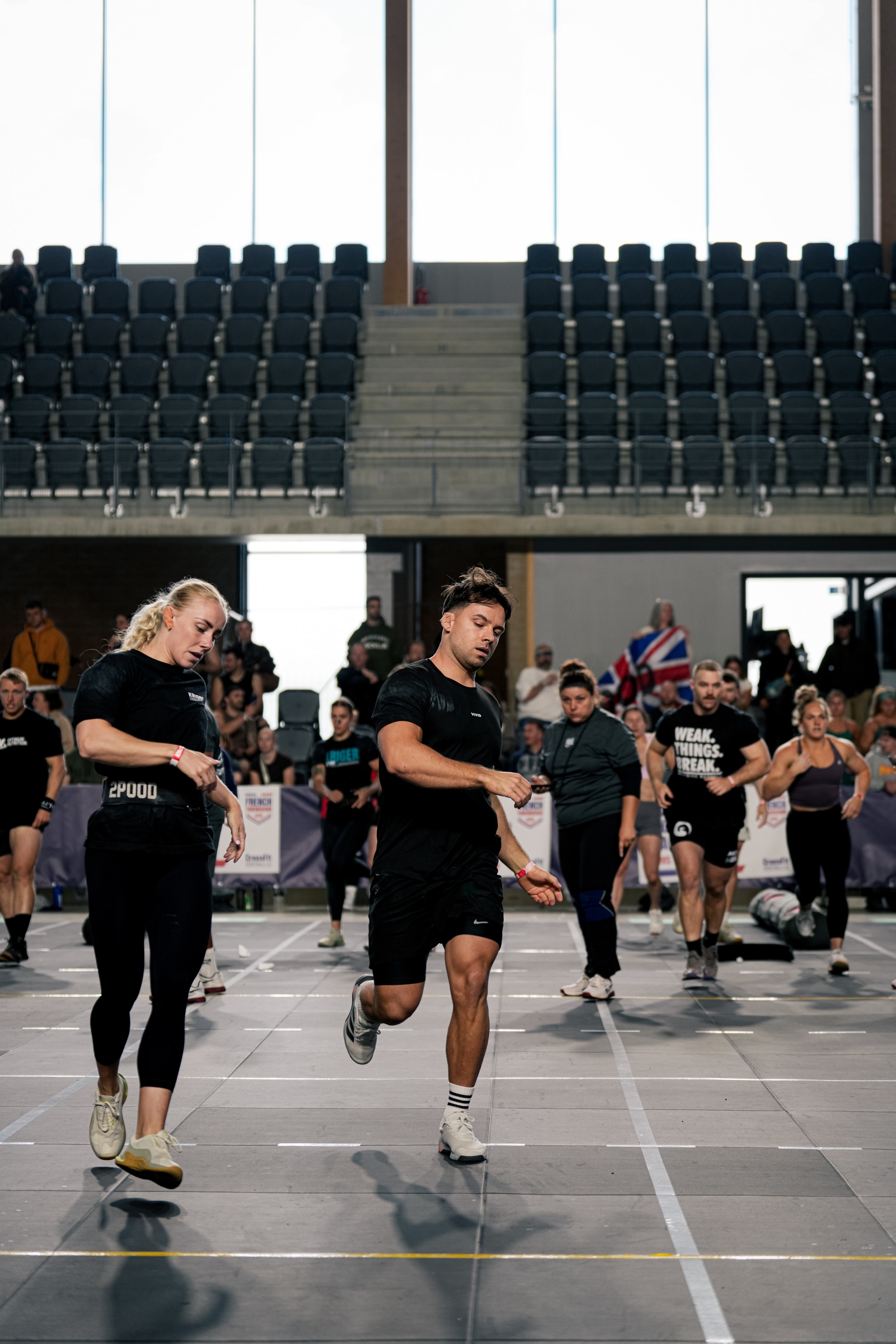
Efficiency means getting the most out of your efforts with minimum use of energy. One of the biggest reasons for us to do CF Specific Blocks with more metcons than usual is that this gives us more CrossFit volume. Because we get more volume we get more practice in doing transitions between different movement combinations. We learn that on some movements we need to use different techniques depending on what it is paired with.
Think about it this way: if we have a Row/Wall Ball workout we might choose to use a hamstring-dominant rowing style to save our legs for the Wall Balls. But if we instead do a couplet with Rowing and Deadlift, we will do the rowing more quad-dominant. No other sport has the combinations and variations that we have, which means we can not simply say that one way to do a movement is the best. We need to build experience on how we can use different techniques depending on the movement pairing we get.
Another thing we get to practice when doing more metcons during this period is to only use as much energy as we need when doing a rep in a movement. A common belief is that we should use exactly the same technique when we do a 40 kg Snatch as a 100 kg Snatch to build a consistent technique. While this might be true for a Weightlifter whose only job is to lift heavy, our job as CrossFitters is very different. The technique when lifting 43 kg Snatch for a total of 80 reps in a workout should look very different to our max lift.
Before every workout during this period it is wise to use a few minutes to focus on how you can do each rep as effortless as possible. You will notice that more focus on this will make a big difference on how good you can use your capacity.
Focus on breathing and general movement patterns. Observe how top athletes stay relaxed and efficient, even during high-rep workouts. Look for small things like breathing patterns or relaxed grips during gymnastic movements. Try to apply one focus point per workout.
Developing a strategy for a workout is one of the most important elements of success in CrossFit. We are always challenged with new workouts and because of this the strategy for the workouts is different every time. If you are an athlete that often improves your score by a lot when doing it a second time, it is a signal that this is something you need to practice more. In live competitions you only get one shot.
In this block we recommend you to make a Gameplan for many of the workouts. This will benefit you a lot and you will also learn a lot more about yourself.
1, Analyze the workout. What time domain is it? If it is an AMRAP this is easy, if it is a For Time workout you need to analyze this more. Where in the workout are your strengths and where are your weaknesses? Let this decide how hard you should push each movement.
2, How should you split the different movements? Go unbroken or break up sets? When to work vs when to rest?
3, Focus points for each movement. What plates, barbells, equipment should you use and what should you wear in terms of Knee Sleeves, Belt, etc?
4, Transitions. When are you allowed to rest vs when should you start the next movement right away? If resting is allowed, how many seconds do you rest?
We recommend making 2–3 different plans for each workout:
If you have the best day ever. The plan where everything goes right and you feel great.
If the day is good but not perfect. Slightly adjusted pacing and set sizes.
What to do if the body is not responding. A sustainable plan that still gets you through the workout.
In the warm up, do a test round with the paces you are going to hold. Is it sustainable? Visualize the workout, especially the parts that are going to hurt the most. Having a clear plan before you start will always give you a better result than going in without one.
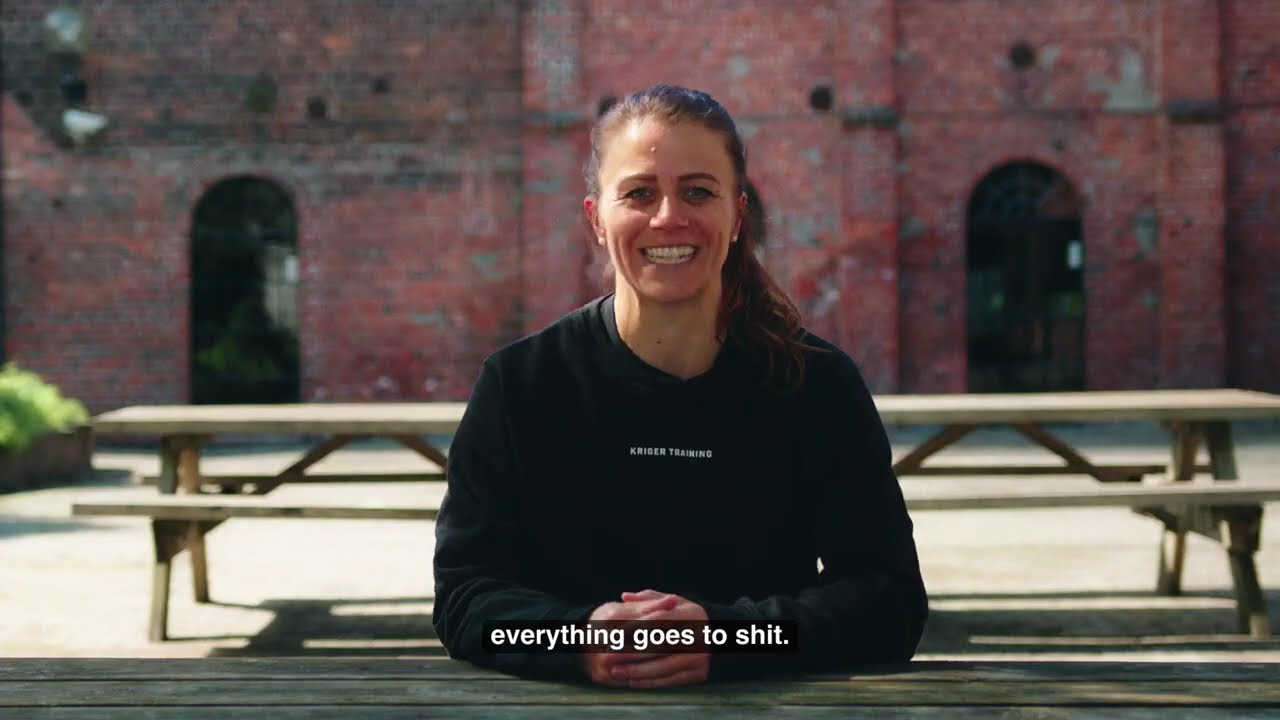
Here is a video where Kristin talks about how she approaches gameplanning for workouts. This is a really good watch if you want to take your strategy work to the next level:
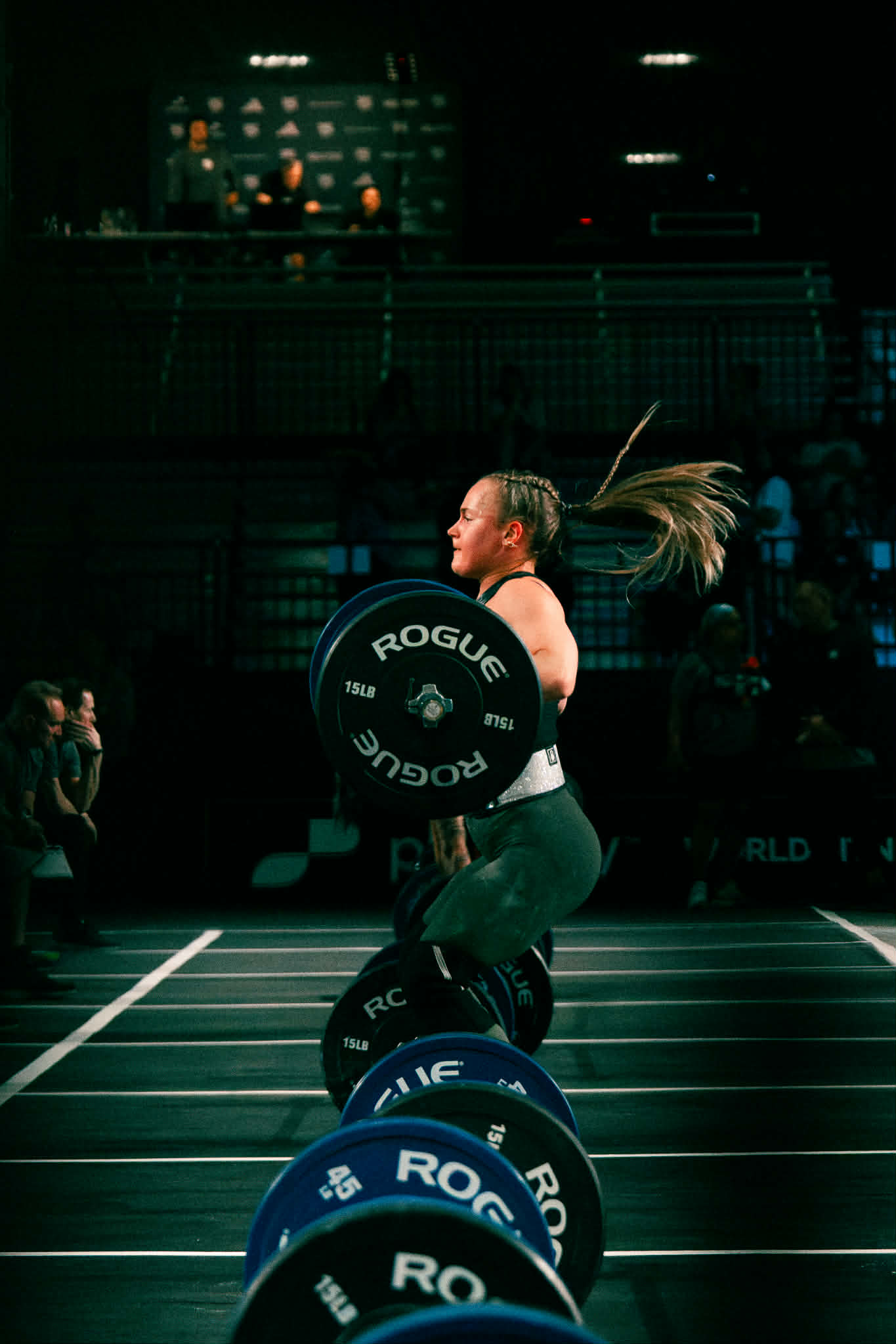
If we want to get really good at CrossFit we need to learn how to transition fast in between movements. This is often the biggest difference between the best athletes and the ones just behind. For the top athletes, there is often not a big difference in how fast and how big of a set the athletes do for a movement. But what you see the absolute best athletes do is that they go straight to the next movement without resting.
In order to work on this you will see that we do many transition-specific workouts where the number of repetitions are low and you need to move fast in this block.
1, Rest Movement vs Work Movement. In most workouts you will often find movements where you will have to dig deep but also movements where you do not gain too much from pushing the pace. Decide in the workout if you are on a "work station" or a "rest station." For example, in a 10 min AMRAP of 10 Snatches at 43/29 kg and 10 Bar Facing Burpees: since we are so used to Burpees we choose to use the Burpees as recovery and keep a slightly slower cycle speed on these. This allows us to start the Snatches right away each round and to do bigger sets.
2, Rest Within the Movement, Not Before. When you go from a movement to another you should always, unless you are going for a big unbroken set, aim to start the next movement right away. This will be tough mentally but since you are switching movements you will most often use new fresh muscle groups. While it is tough mentally it will feel better as soon as you start. The only exception is if you have a medium-big set where you feel that the best strategy is to do unbroken sets and a bigger rest helps with this.
3, Mental Strength. We can not get away from the fact that in order to be good at CrossFit you need to be mentally strong. And for transitions a big key is to be mentally strong. Here are a few things to work on:
Remind yourself that the pain is temporary and it will feel better as soon as you start. Set small goals by starting with a low number, then adjust up if it feels good. Be positive: instead of thinking about how hard it is, think about "one more rep." Visualize yourself being fast in the transitions and working through it.
In order to get used to the fast transitions in between movements it is often the best idea to learn to do smaller sets of the movements. Find numbers that allow you to go fast into your next set again instead of going to your absolute limit for each set. For example: you might in a set of 20 Muscle Ups start with sets of 4–5 reps even if you are capable of 10+. This will allow you to jump back up to the bar right away for a set of 3–4 reps and if you can keep the number to something that does not feel intimidating, the total rest both during and after the movement is often shorter.
During the Building Block we did a lot of linear progressions week by week, especially for strength and for some of our endurance work. The upside with this is that it is easy to make sure that we increase the demands on our body just a little bit each week and it is a very smart way to make stronger. It is also easy to track progress.
There are however a few downsides with this approach, and this is one of the main reasons why we break out of the Building Blocks and use the CF Specific Block.
1, Strength is Specific, CrossFit is Variation. When doing linear progressions in strength movements we get stronger, but strength is very specific in the exact movement pattern we work in. A stronger Back Squat will mostly make us stronger in the Back Squat, but when we instead get a sandbag on our shoulders for Sandbag Squats, we will not be able to use all that strength in this movement. This is where the CF Specific Block comes in. The goal is to vary the strength training a lot, to even out the strength limiters and build a better overall fitness.
2, Limits the Variation in Metcons. When we do linear strength and conditioning work we do not want too much difference in workouts during the week. In the Building Block we stay more methodical, while in the CF Specific Block we make sure that we get exposed in all time domains and rep schemes that we might see in a competition.
3, Synergy Only Shows Up Under Pressure. In Building Blocks, we improve strength, endurance and skill in isolation. But in CrossFit, we are almost never tested in isolation. We are tested when all capacities collide under fatigue and high heart rate. The CF Specific Block helps bridge this gap. You start learning how to express your strength under fatigue, how your gymnastics holds up when combined with heavy legs, or how fast your transitions need to be to make use of your engine.
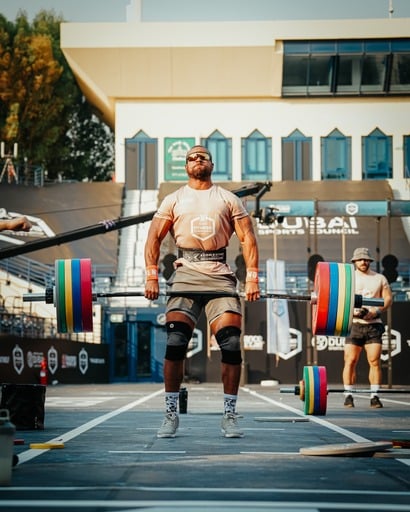
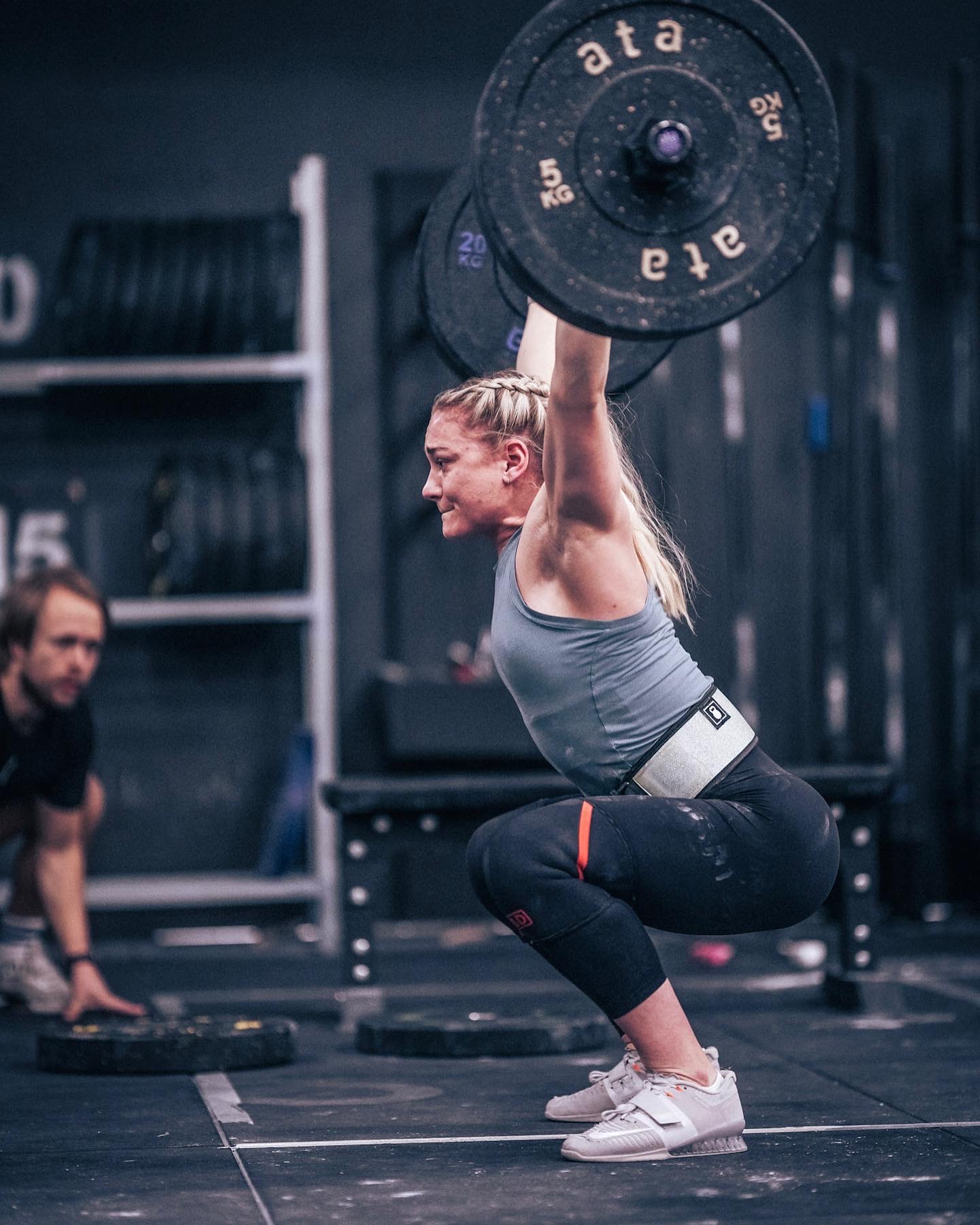
For our Lower Body Strength in this block the focus is very specific: we want to increase our Front Squat and build to a new max by the end of the block. Because of this you will see a lot more max strength work compared to Block 1. We are done with the high-rep volume cycles and it is time to go heavy. You can also use sleeves and belts again.
In addition to the Front Squat work, the rest of the lower body training will be more varied. You will see different Back Squat variations, Single Leg work, and often a "minimetcon" as a finisher of a squat session where we might do Wall Balls, Sandbag Squats, Thrusters etc. The reason for this variation is that we want to make sure we get strong and enduring in all angles of the squat. In CrossFit we never know what movement we will get challenged in, so building strength only in one pattern is not enough.
For the Upper Body we are building directly toward three tests: the 1RM Strict Press, 1RM Push Press, and the 1RM Weighted Pull Up + Max Strict Pull Ups. Each movement will have one dedicated day per week to prepare for these tests at the end of the block.
If upper body strength is what is holding you back in gymnastics, it might be smart to follow the Strength Track during this block. The reason for this is that for the Strength Track we care a little bit more about the interference effect between capacities. While you do see slightly more strength work, the biggest difference is actually how we adjust the metcons to not interfere with recovery between strength sessions. This way you are more ready for each important session.
In Block 2 the Olympic Lifting becomes more specific to the tests we are going to do. For the Snatch we go heavier with more Hang Squat Snatches after building the overhead position and hang positions in Block 1. The positions we built should now allow you to lift heavier with better quality. You will see the weights go up and the complexity of the complexes go down.
For the Clean & Jerk the focus shifts to the 1RM Power Clean & Jerk (TNG) and preparing for the C&J Battery from Quarterfinals 24.4. In Block 1 we did Cleans from Blocks, complexes, and battery lifting including the Sandbag. Now in Block 2 we get more specific. A big thing is to keep working on the overhead position since a good Jerk is very helpful when we want to get better at cycling the bar faster in Clean & Jerk.
Take the strength and OLY sessions seriously in this block. Even though we do more CrossFit workouts, these sessions are directly building toward your Test Week results. Make sure you go into these sessions rested and with full focus.
The biggest difference between a Building Block and a CF Specific Block is how many metcons we do per week. In the Building Block our endurance work was more structured with threshold intervals, VO2 sessions, and dedicated zone 1-2 work. In the CF Specific Block a big part of our endurance training comes from the metcons themselves. We get more volume, more movement variation, and more practice at pacing under fatigue.
But there is an important distinction to make. The main goal of the metcons during the week is to build better movement efficiency. Make sure you read the intensity guide for each metcon. An RPE 7 session should be in control where the focus is how you move, while an RPE 8.5 is where we push the intensity a lot harder. By holding back enough on the lower RPE sessions you allow yourself to push harder when it matters — for our endurance intervals and Competition Simulation workouts. This is what often helps you take the next steps in this sport.
For our endurance tests we are building toward the 5000 m Run and a shorter 1000 m Row. We will keep running twice a week, varying between low intensity and higher intensity where we push closer and closer to our goal pace for the 5 k test.
For the rowing, most of our work will be done as speed intervals to increase the top speed we can produce. This is a different approach compared to the longer pieces we did in Block 1, and it is a great way to build power on the rower.
The biggest goal for our CF Specific Training is to work on movement efficiency with different movement combinations. We want to get better at moving well when we are tired and when movements are mixed together in ways we do not always expect. In addition to this we will put some extra work into Wall Ball efficiency and Burpee Box Jump Overs since this is something we will test at the end of the block.
As CrossFitters we are often really good at pushing ourselves. But if we push the intensity too hard too often we will no longer be able to recover from the sessions. If in doubt whether you should push harder or hold back in a metcon during the week, hold back. Save the intensity for the Competition Simulation days and the test-specific Fridays.
We continue to build Strict Pull Ups and Press/Push Press as core upper body strength. The reason for this is that these movements give us the foundation for everything gymnastic we do — from Muscle Ups and HSPU to Rope Climbs and Handstand Walks. By continuing to push these numbers up now, we set ourselves up for much better gymnastics capacity later in the year when the demands increase.
In addition to the strength base, we are specifically preparing for the Legless Rope Climb and Wall Walk tests at the end of the block. Both of these are movements where technique and specific strength need to come together, and we will build that progressively over the six weeks so you are ready to perform when test week arrives.
One of the biggest changes compared to the Building Block is that we now get significantly more gymnastics volume inside metcons. You will see gymnastic movements paired with weighted exercises and machines in combinations that look a lot more like what we see in competition. This is where we practice doing gymnastics when we are fatigued, with a high heart rate, and after movements that challenge different muscle groups. This is how gymnastics works in CrossFit, and the only way to get better at it is to practice it.
When gymnastic movements show up in metcons, focus on maintaining good positions even as fatigue builds. The goal is not just to get through the reps, but to move well under pressure. This is what separates a strong gymnast from a fit one.
A big part of getting better at CrossFit is practicing how we compete. This is why we have two Competition Simulation days in this block where you do three workouts in one day, just like in a real competition. This is something we have done successfully in previous CF Specific Blocks and it is always a highlight.
It also gives us a training stimulus that is often very useful. In normal training we do one session and then recover. But in competition you have to perform again when you are already tired, when your legs are heavy and your grip is gone. This is a completely different skill and it only gets better with practice. The Competition Simulation days are where we train that skill.
It is your choice if you treat this as regular training or if you do it as an event with your friends and use it to practice competing. Either way it is a great opportunity to practice your gameplanning across a full day. How do you pace the first workout when you know there are two more coming? How do you eat and recover between events? These are skills that only come from practice.
Mark these dates in your calendar: Saturday June 6 and Saturday June 20. These are the days where we put everything together and simulate what it feels like to compete.
After the CF Specific Block we go into our first Test Week of the year. This is where we see if the training from Block 1 and Block 2 has actually worked. Every test is directly connected to something we have been working on, and together the tests give you the first quarter of your complete Athlete Profile.
The Test Week will give you the first quarter of our new Athlete Profile which will give us a lot more insights and will help tell you how you should possibly adjust your training a little to work more on the things you need. After all four Test Weeks your complete profile will cover eight different categories across the full year.
As in every block there are risks to be aware of. In the CF Specific Block what you need to be most aware of is the following:
When we do more CrossFit workouts as we do in this block it also invites to more intensity and there is a risk if we push the intensity too hard too often. Make sure to read the instruction for each workout and follow the RPE. If in doubt, always hold back more than you feel is needed.
Since there is a lot of variation in workout types and movements it can happen that you are starting to feel a certain body part a little extra. Make sure that you adjust the workouts accordingly to not go over the line to overuse injuries. If a shoulder feels off after a heavy pressing session and the next day has high volume Thrusters, scale the weight or reduce the volume. It is always better to hold back one session than to miss two weeks.
The same principles from the Building Block apply here. If you feel like the quality of your sessions is going down toward the end of the week, or that your last session always feels heavy, consider removing some volume. More often than not the answer to feeling stuck is to do less, not more. We are always ready to help with these adjustments.
All tracks are moving into the CF Specific Block but you can still target your training to either more Strength or more Endurance in our specific tracks.
The full CF Specific experience with the most gymnastics. Be ready to adjust down volume on your strongest areas for more recovery.
In this block the Strength Track differs more from the other two tracks because here we are more careful about the interference effect between capacities and want to make sure that we still keep high quality in our strength work. We also limit movements more in the metcons where we for example do less squats and jumps in order to make sure that we keep high quality on the strength progressions, which you see more of in this track than the other two.
Very similar to Main Track in this block but we have a slightly higher frequency of conditioning and in some metcons you notice that the weight is lighter as well to make sure it allows us to keep moving.
You are never better than your weakest movement. If you have a weakness in form of a gymnastic movement we have you covered. Choose from one of our add on programs that will take you 10–20 min 3 times a week. Recommended days to do these programs is as the first part Monday, Wednesday and Friday.
If you have another weakness movement than any of these, send us a message and we will help you make a plan.
We really look forward to attacking this CF Specific Block together with you.
The most important thing to focus on during this block is to be deliberate. Before every workout, have a plan. During every workout, focus on moving efficiently. After every workout, reflect on what went well and what you can improve. This is how you get the most out of the CF Specific Block.
If you are unsure what your focus points should be during the block, or if you feel like you should adjust something but do not know how, send us a message and we are happy to help.
Kriger Training